Benthic Ecology: Lake Zurich
Contrasting benthic communities between the Upper and Lower basins of Lake Zurich
Overview
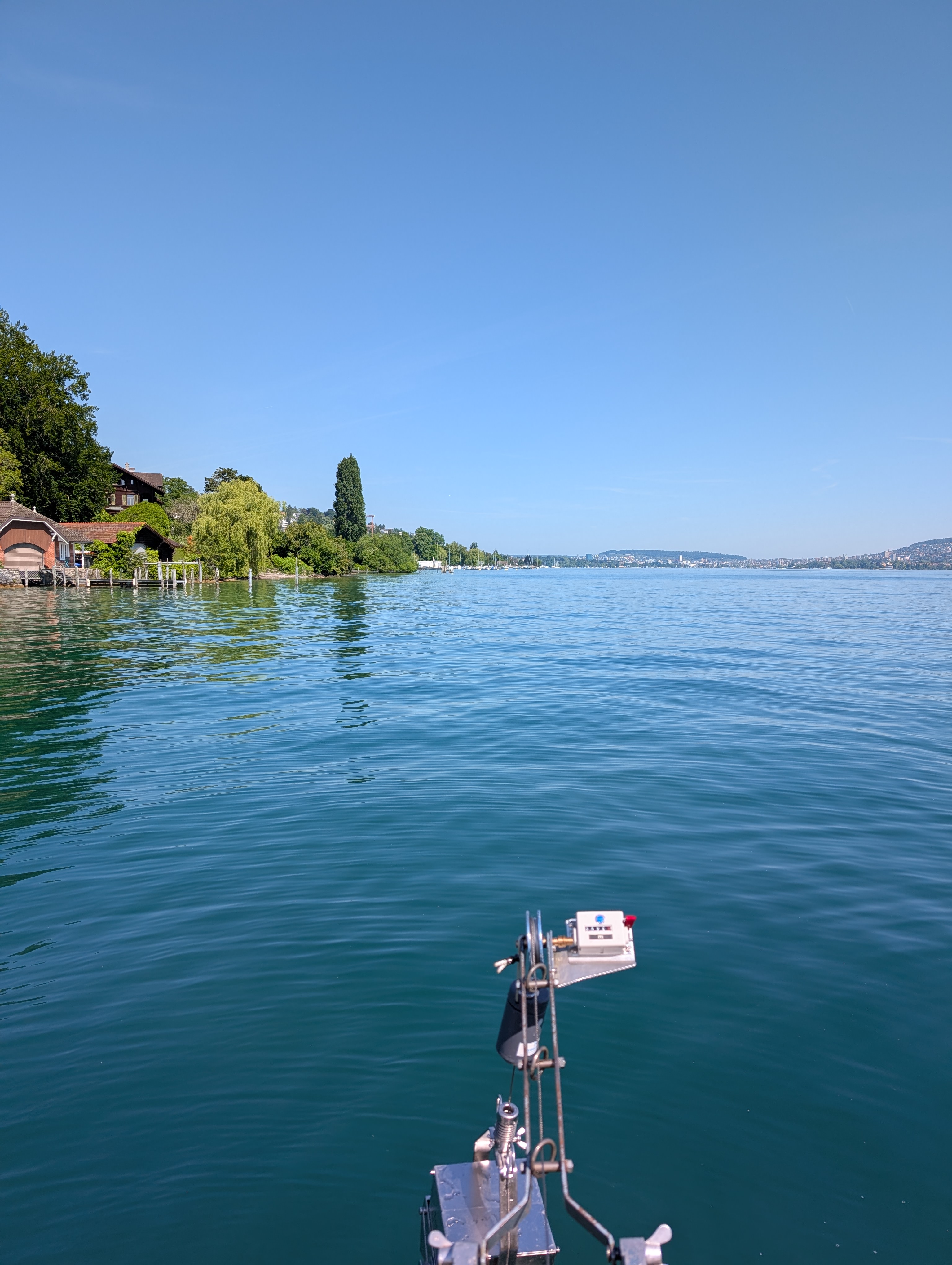
Lake Zurich is a pre-alpine lake in northeastern Switzerland and a key drinking water reservoir for the city of Zurich. No comprehensive baseline survey of its benthic macroinvertebrate community had previously been conducted. This project fills that gap, and asks a new question: do the Upper Lake (Obersee) and Lower Lake (Untersee) differ in how they have been invaded?
Benthic invertebrates are sentinels of shoreline change. They recycle nutrients, feed fish, and, unlike pelagic organisms, are tied to substrate, so they cannot simply leave degraded habitat. This makes them ideal indicators of ecological change. The littoral zone, where light, substrate, and organisms collide, is where the invasion signal is strongest.
Study Design
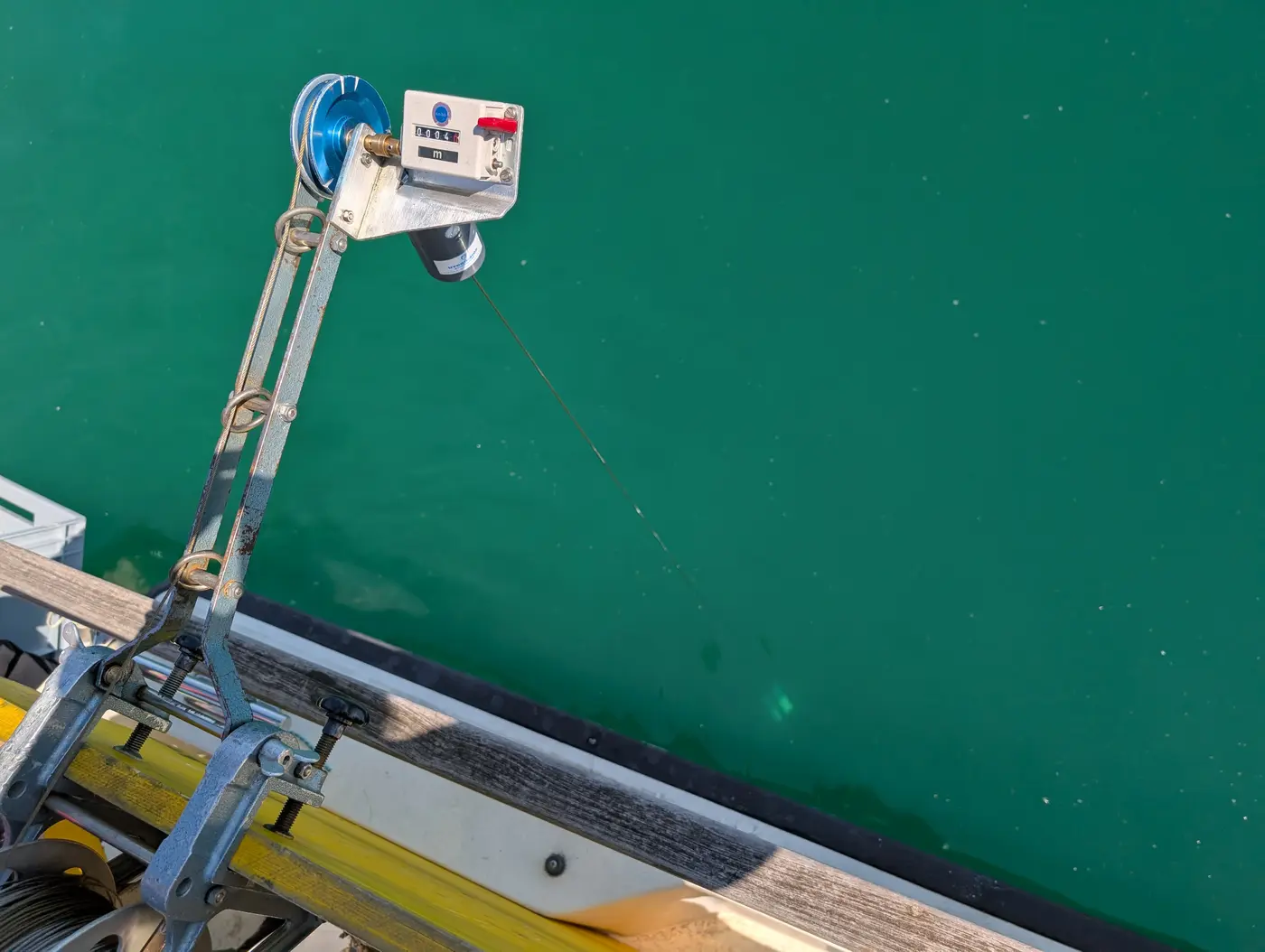
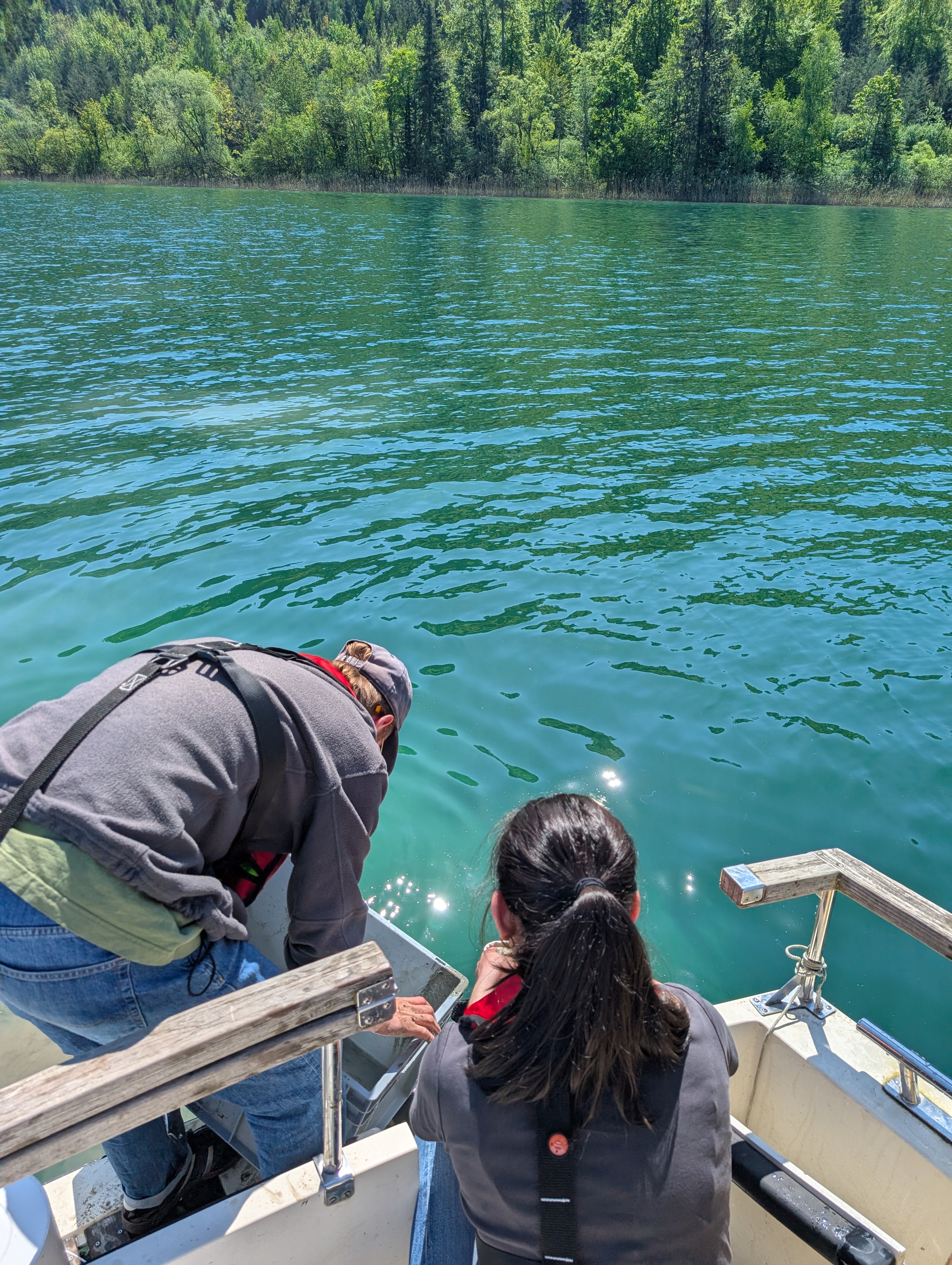
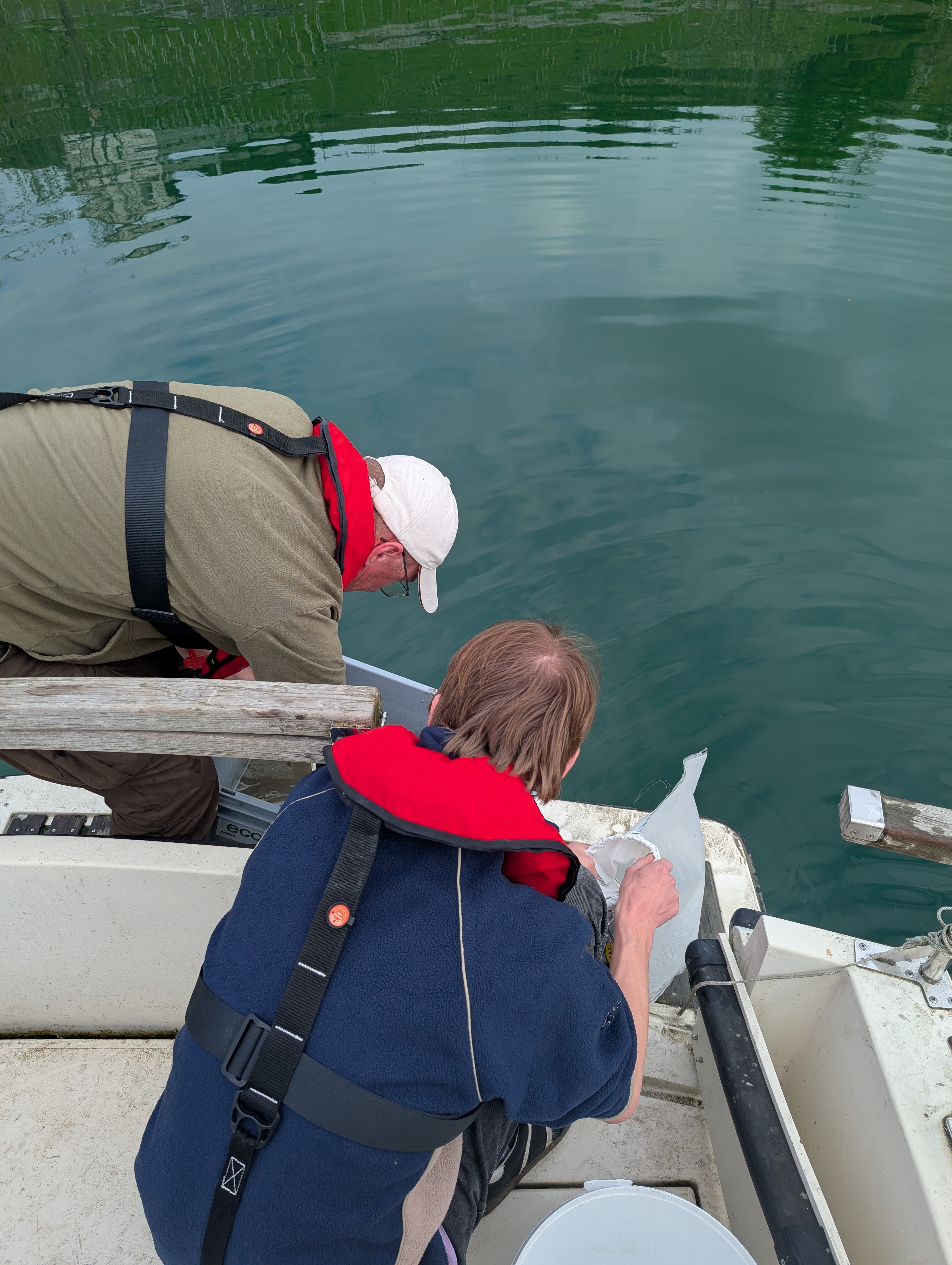
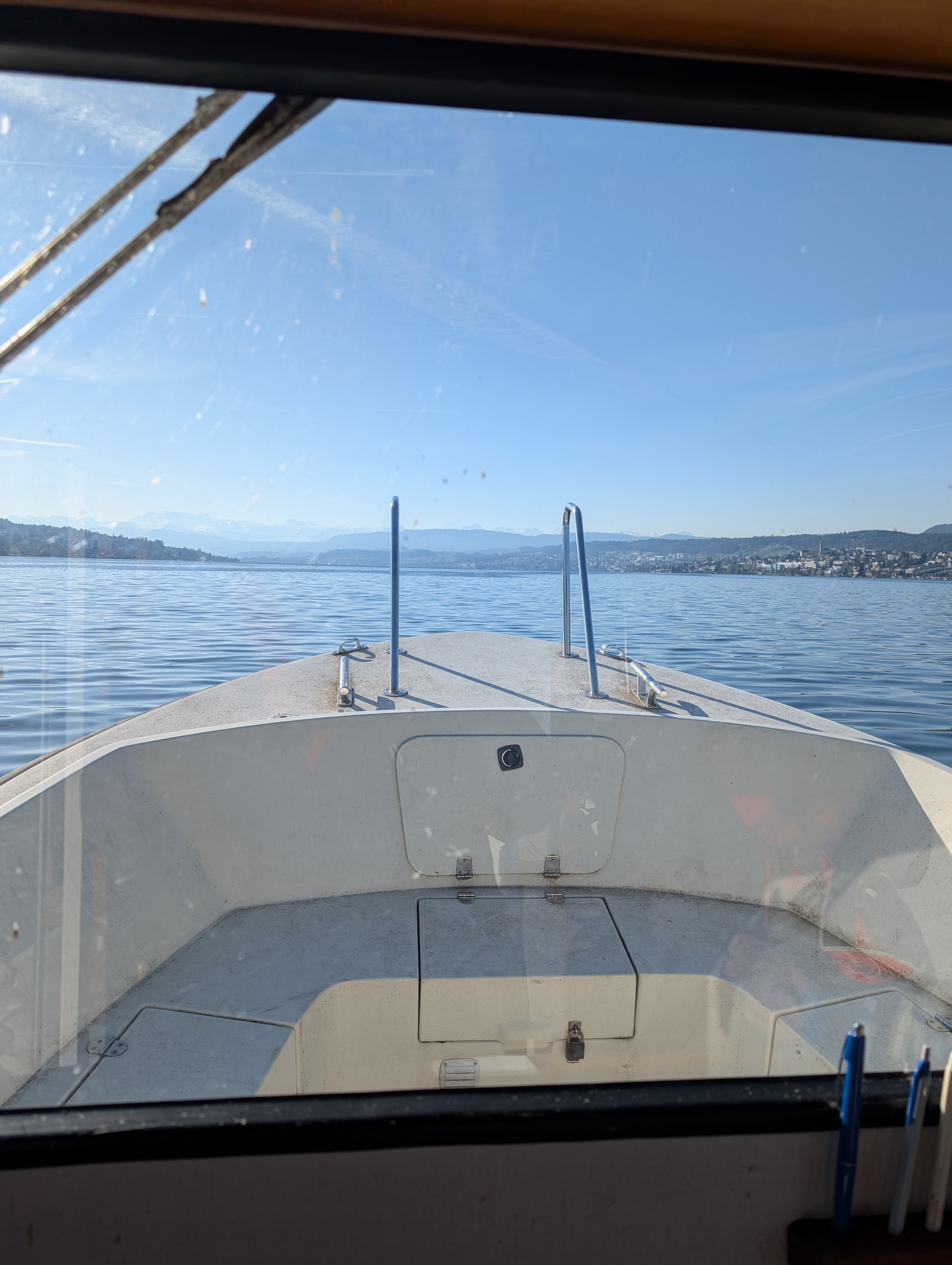
Sampling was carried out at 7 sites, 5 in the Lower Lake and 2 in the Upper Lake, across three depth zones:
- 1 m (sampled in 2024): using a vacuum device
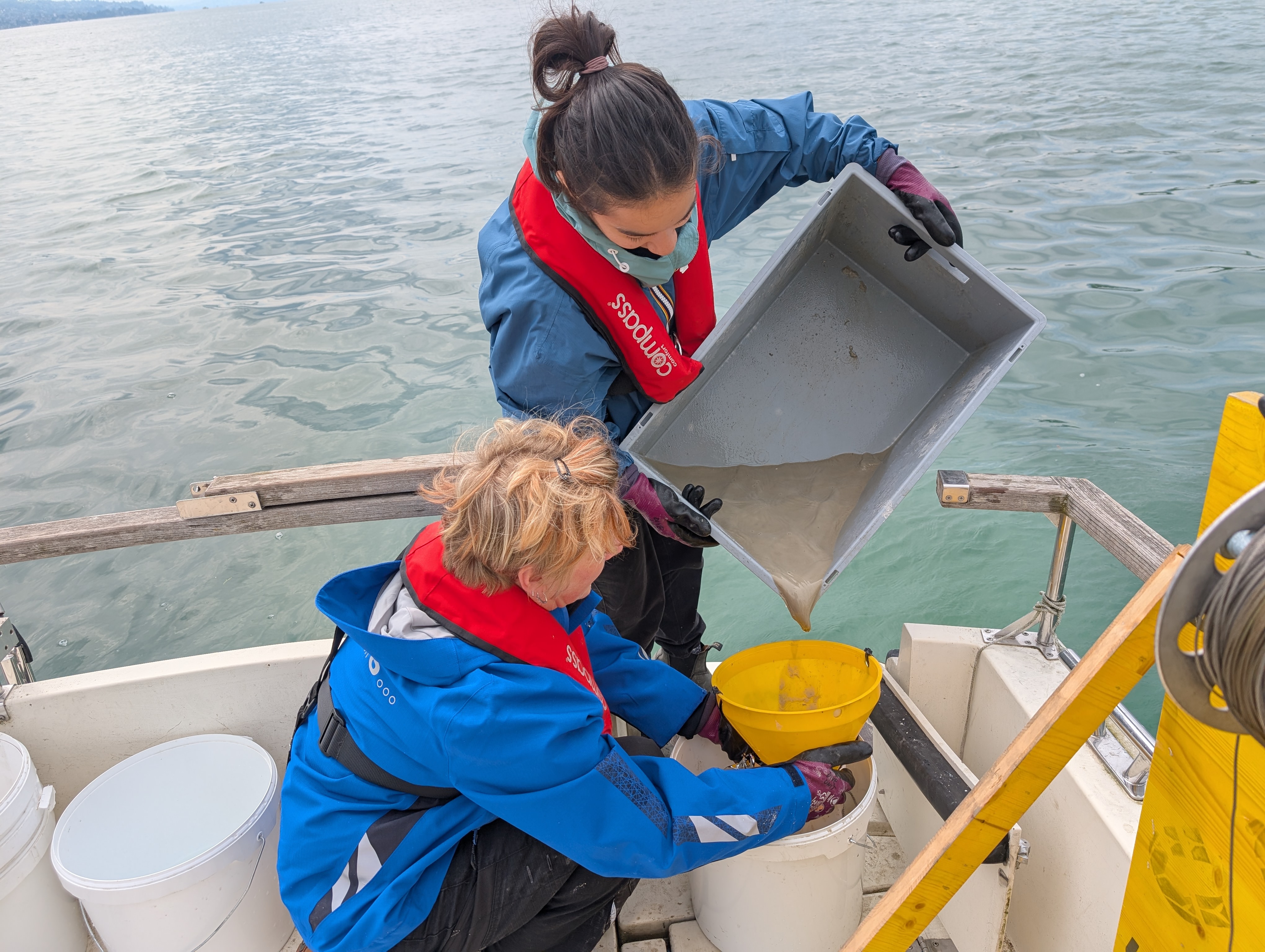
- 5 m (sampled in 2025): using Ekman grabs
- 15 m (sampled in 2025): using Ekman grabs
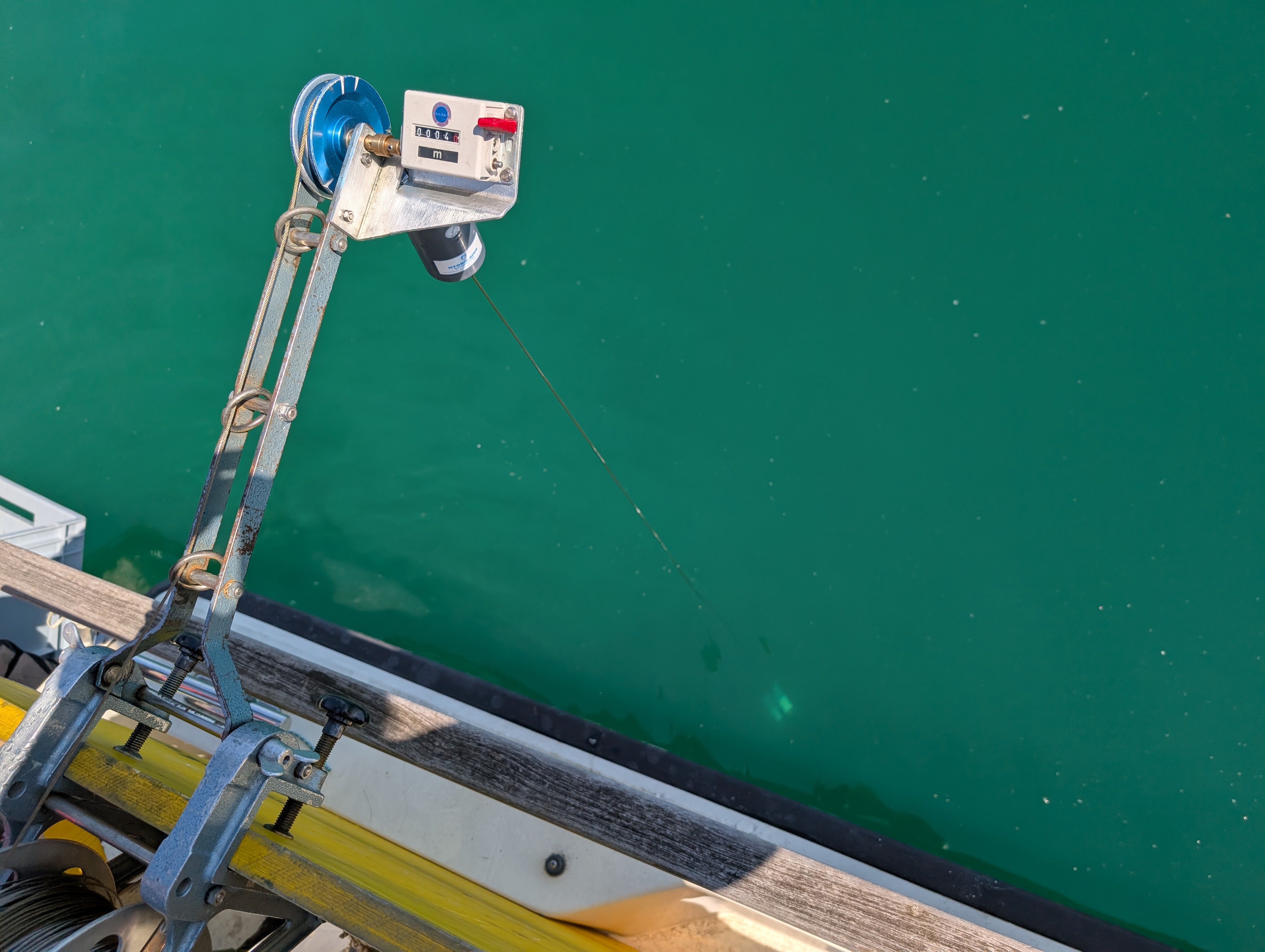
All samples were preserved in ethanol in the field, then sorted and identified under stereo- and compound microscopes. All individuals were enumerated and identified to the lowest possible taxonomic level.
Dataset
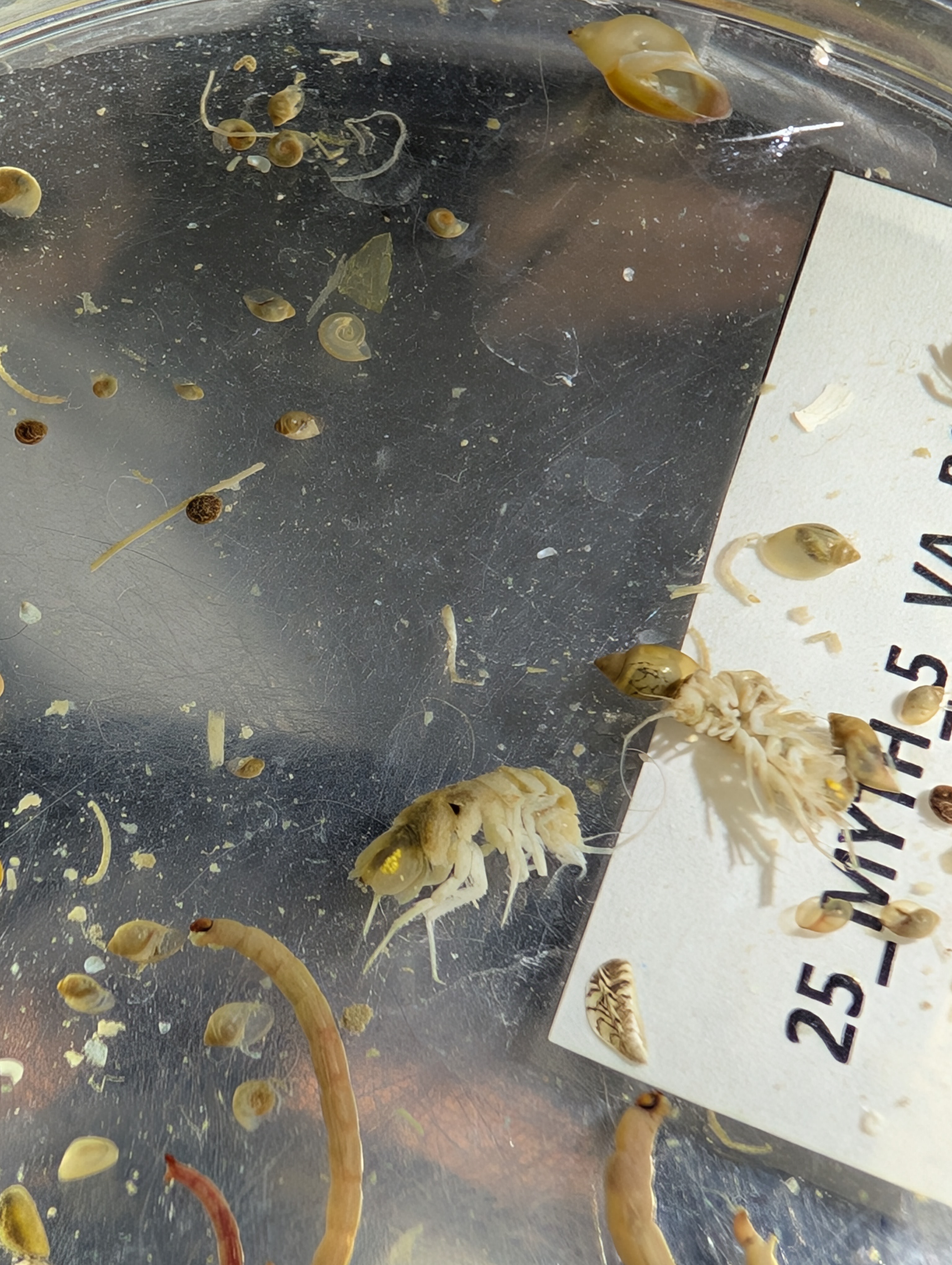
The dataset comprises 92,085 individuals across 65 taxa and 8 classes, the first quantitative, multi-site, multi-depth baseline for the benthic invertebrate community of Lake Zurich.
Key Findings
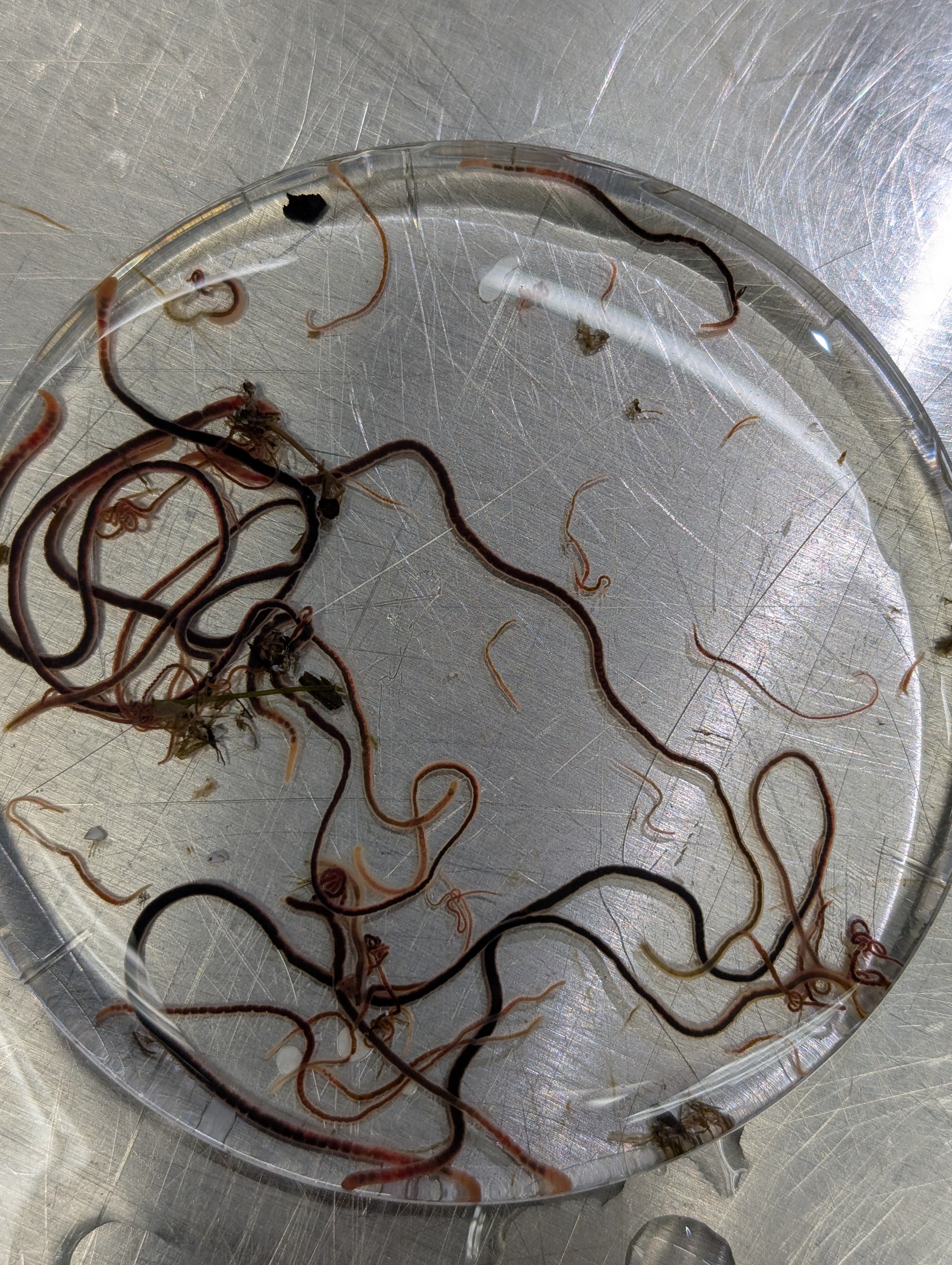
Community composition is structured primarily by depth. Bivalves dominate shallow communities (1–5 m) in both basins, while 15 m communities are compositionally distinct. In the Upper Lake at 15 m, Clitellata (worms) account for 44% of individuals; in the Lower Lake at 15 m, Clitellata reach 39%.
Invasive species dominate shallow water in both basins. Non-native taxa account for the majority of individuals at 1 m and 5 m depth:
| Depth | Lower Lake (invasive %) | Upper Lake (invasive %) |
|---|---|---|
| 1 m | 85% | 59% |
| 5 m | 68% | 69% |
| 15 m | 24% | 8% |
The two basins differ functionally. Upper Lake communities occupy broader functional trait space across all categories (FDis, FEve, FRic), suggesting higher functional diversity despite similar invasion levels at shallow depths. The Lower Lake is characterised by sessile active filter feeders on fine and hard substrates, while the Upper Lake supports more mobile gatherers and soft-substrate taxa.
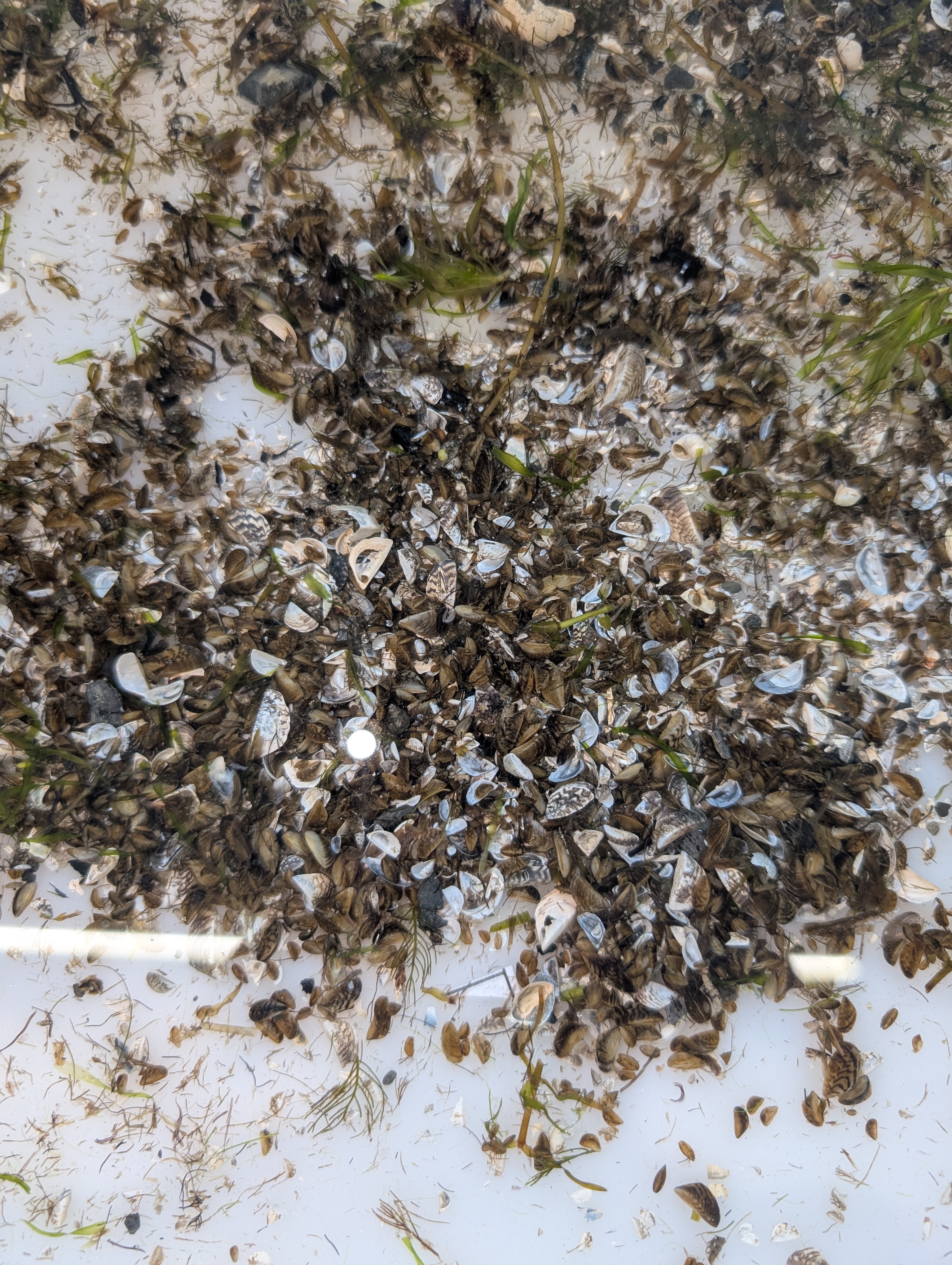
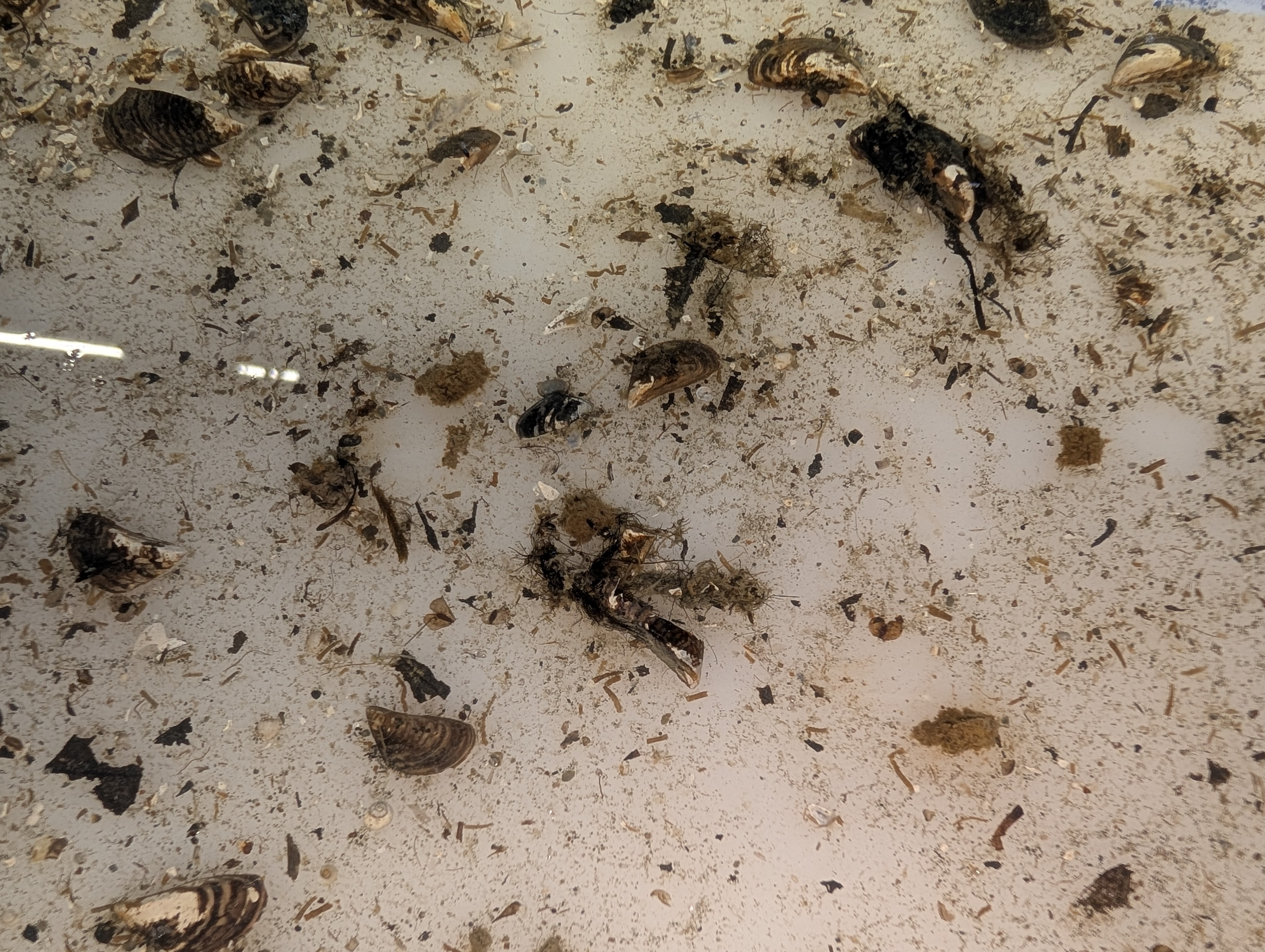
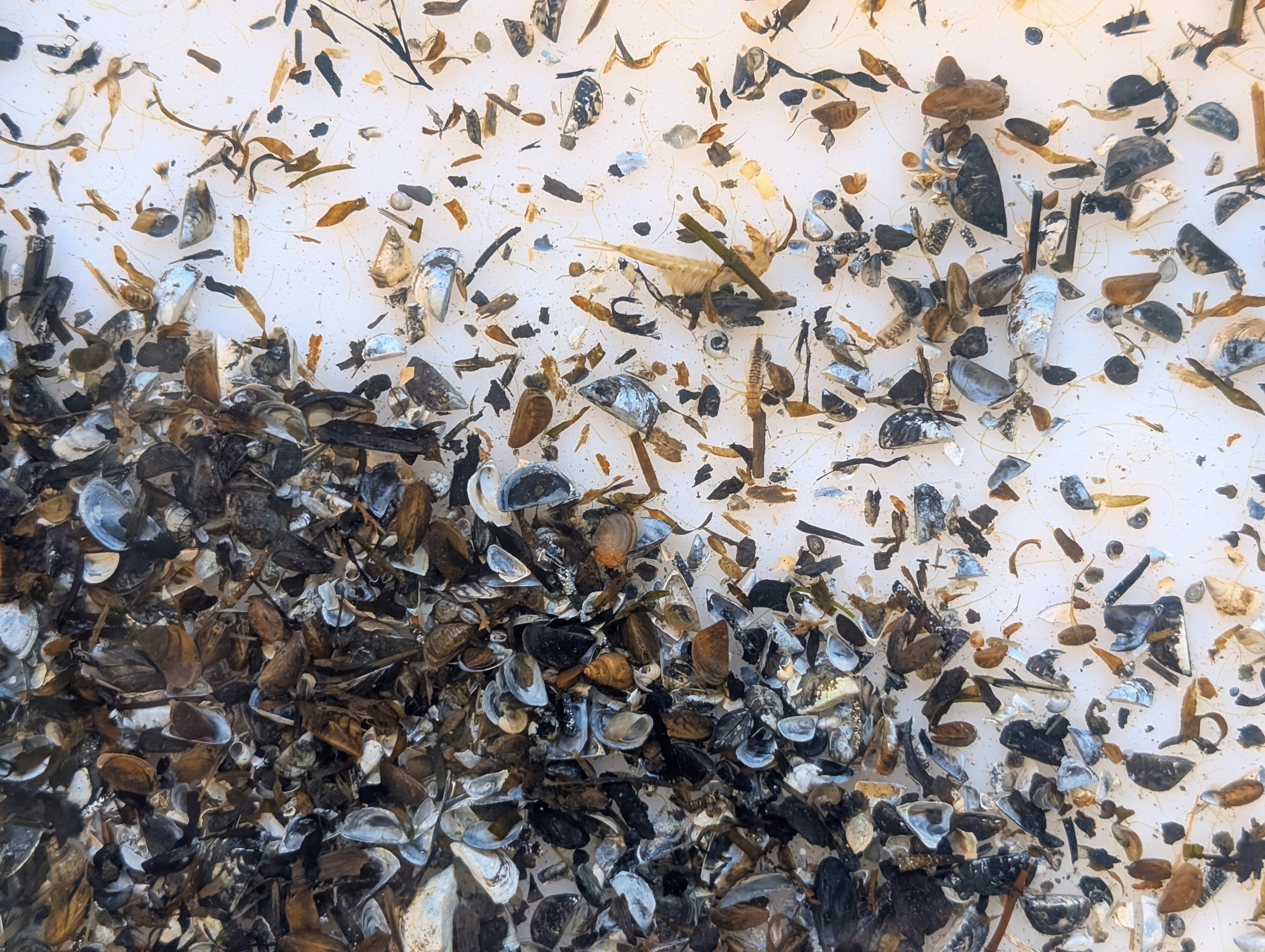
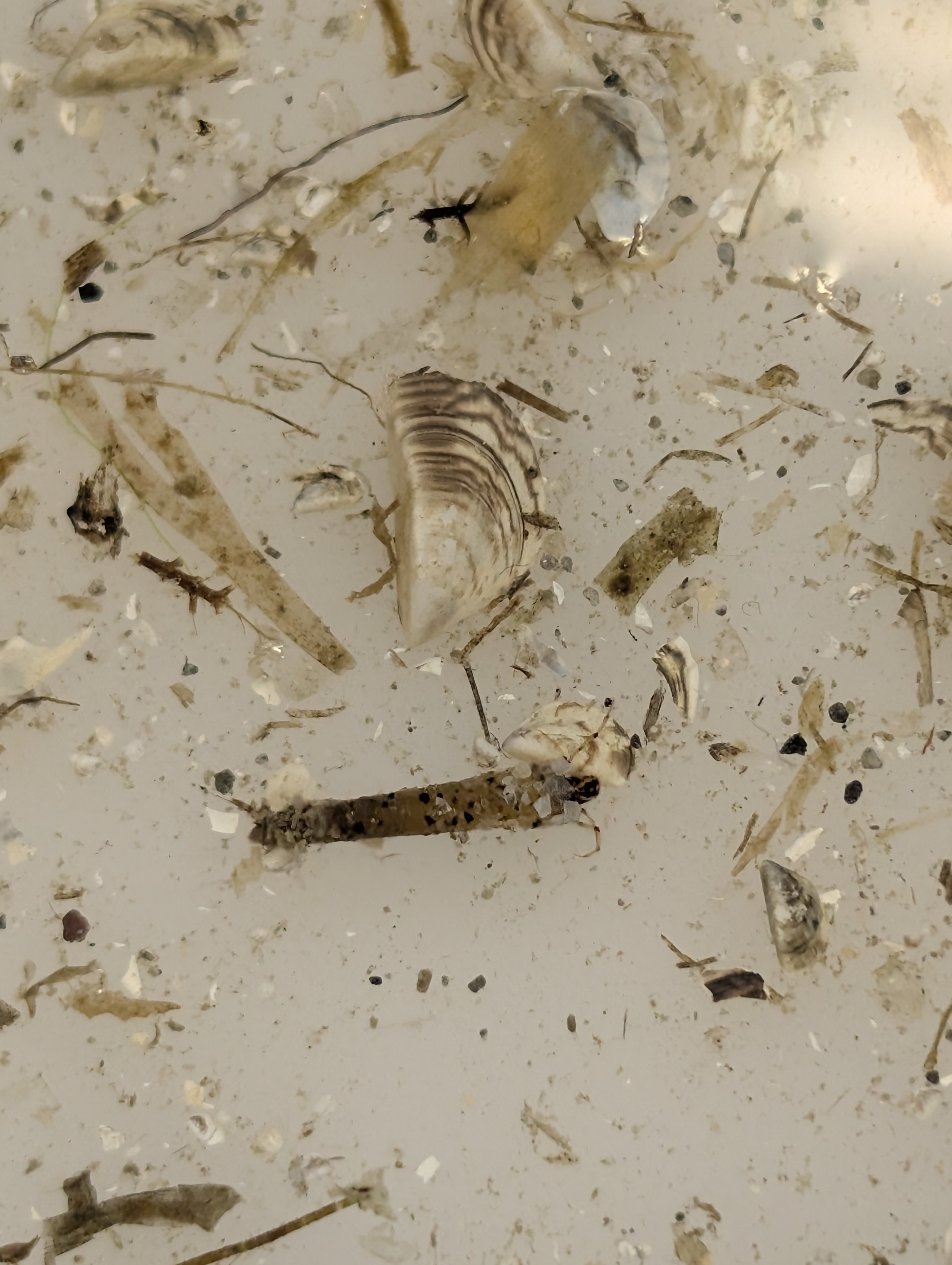
The Quagga mussel invasion is still in its early stages in Lake Zurich. The Zebra mussel (Dreissena polymorpha) currently dominates at most sites, but the Quagga mussel (D. bugensis), first detected here in 2024, is already present across the Lower Lake. In Lake Constance, where the Quagga mussel is established, densities reach ~8,000 ind. m⁻², a stark contrast to the current situation in Lake Zurich (~28–74 ind. m⁻²), and a possible preview of what is to come.
Compared to historical data, Zebra mussel densities have increased ~88× in the Lower Lake (from 113 ind. m⁻² in 1978–1988 to 9,958 ind. m⁻² in 2024/25), while Potamopyrgus antipodarum (New Zealand mudsnail) has declined ~43× (from 28,905 to 676 ind. m⁻²).
What Drives the Basin Contrast?
Three interacting factors likely explain why the Lower Lake shows a stronger invasion signal:
- Invasion pressure: The Lower Lake has 53 registered marinas (536 permits) compared to 17 (206 permits) in the Upper Lake, and receives more boat traffic from high-risk source waters such as Lake Constance and Vierwaldstättersee. (Daten von Koordinationsstelle SMRP)
- Habitat filtering: 55% of the Lower Lake shoreline is artificial, compared to 35% in the Upper Lake. Modified shorelines filter out sensitive native taxa and create conditions where stress-tolerant and invasive species thrive.
- Basin morphology: Water flows from Upper to Lower Lake through the Rapperswil narrows. The Lower Lake (~65 km², max. 137 m deep) receives input that has already passed through the Upper Lake (~27 km², max. 48 m deep).
A manuscript is currently in preparation.
Photo Gallery